the coffee
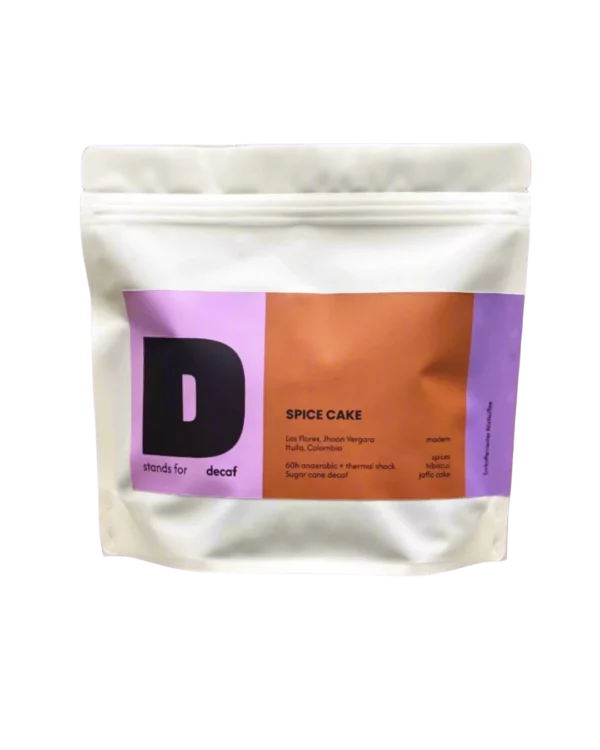
A single-origin Pink Bourbon decaf from Finca Las Flores in Huila, Colombia. Multi-stage anaerobic fermentation and a thermal shock lock in the coffee’s character before it’s decaffeinated using the in-country sugar cane process, which keeps the cup unusually complex for a decaf.
In the cup: warm spice, hibiscus and jaffa cake, with soft orange and chocolate underneath.
the roaster
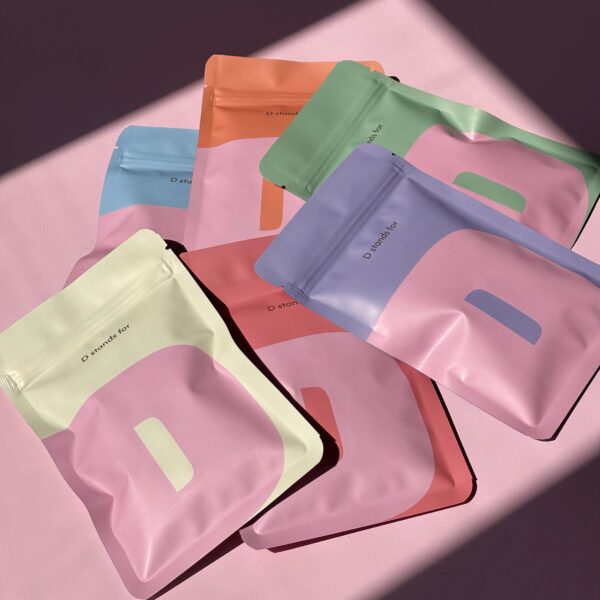
D Stands For is a specialist decaf micro-roastery in Vienna, founded by Miriam with one goal: to prove that great coffee doesn’t need caffeine.
By sourcing exceptional coffees, working with natural decaffeination methods and roasting every batch with precision, D Stands For creates coffees that are judged by their flavour. Not by the fact they’re decaf.
The result is a decaf that tastes like specialty coffee should.
the farm
Finca Las Flores is located near Acevedo in Huila, Colombia, at an altitude of 1,750 metres. The farm was founded more than 30 years ago by Edilberto Vergara and Nubia Ayure and is now run by their sons.
Jhoan oversees coffee production and farm management, while Diego specialises in fermentation and drying. Together, they’ve helped establish Las Flores as one of Huila’s benchmark farms for quality.
Pink Bourbon is one of the farm’s signature varieties. It’s grown under the shade of native and fruit trees, creating ideal conditions for slow, healthy cherry development.
the process
The cherries go through a multi-stage anaerobic fermentation.
The cherries first undergo 24 hours of anaerobic fermentation, followed by a 12-hour oxidation rest. After pulping, the beans ferment for another 36 hours with mosto (the juice from the same coffee variety). This last step adds extra complexity.
Fermentation is then stopped with a thermal shock. The beans are first rinsed with hot water at around 50°C, followed by cold water at around 20°C. This helps lock in the flavour compounds developed during fermentation before drying begins.
The coffee is then slowly dried in a sealed dehumidifier until it reaches around 11% moisture. Finally, it rests for a week before moving on to the next stage.
the decaf method
The coffee is decaffeinated in Colombia using the sugar cane process. First, the green beans are steamed to open their pores. They are then repeatedly washed in a solution of water and ethyl acetate (a natural compound derived from fermented sugar cane) until around 99.9% of the caffeine is removed.
A final steam removes any remaining traces of the ethyl acetate before the beans are dried.
When done well, this process removes the caffeine while preserving the coffee’s structure, sweetness and aroma. That’s why this coffee still tastes like a vibrant single-origin, rather than a decaf.
our current espresso recipe
18 gram in
36 gram out
total brew time +- 26 sec, including 8 sec pre-infusion